
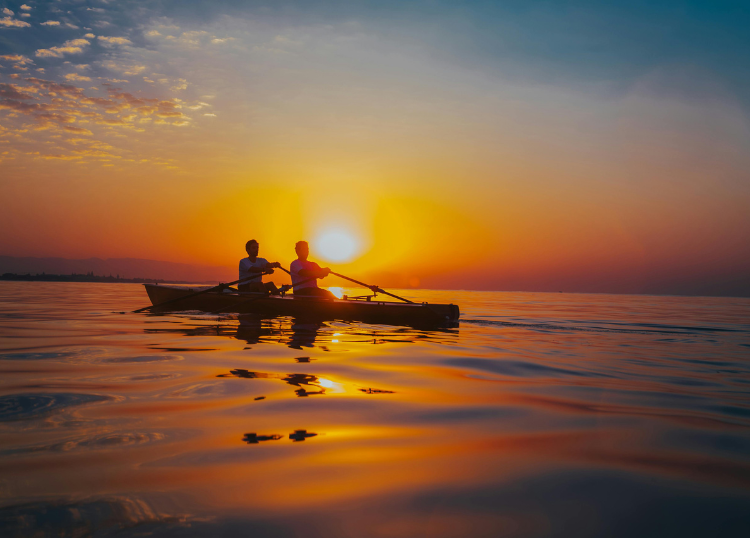
Spring brings a change in the way many South Africans spend their weekends.
Warmer days make being on the water more appealing, while conditions in some destinations can be comfortable before the hotter part of summer arrives.
Kayaking and canoeing also provide a different way to experience familiar places.
A coastline seen from a kayak feels very different from the same coastline viewed from a road. Rivers can take paddlers through areas that are difficult to reach on foot, while lagoons and estuaries provide quieter options for people trying paddling for the first time.
South Africa has opportunities ranging from guided urban sea-kayaking trips to multi-day river journeys.
Choosing the right one starts with deciding what kind of water you want to paddle.
Kayaking and Canoeing Are Not All the Same Experience
The terms kayaking and canoeing cover a wide range of activities.
A short guided paddle across a protected lagoon has little in common with a multi-day expedition on a large river.
Sea kayaking introduces wind, waves, currents and changing coastal conditions.
River paddling may involve flowing water, rapids or long stretches far from easy road access.
Dams and sheltered inland waters can offer calmer conditions, although wind and weather still matter.
Before choosing a destination, understand what type of paddling the trip involves and whether it suits your experience.
Spring Conditions Vary Across South Africa
Spring does not produce identical conditions across the country.
September on the Western Cape coast can feel very different from the same month in KwaZulu-Natal or the Northern Cape.
River levels can also depend on rainfall, dam releases and conditions well beyond the immediate paddling area.
Do not choose a trip based only on the season.
Check current water and weather conditions with the operator or relevant local authority before travelling.
For guided activities, reputable operators should also make decisions about whether conditions are suitable on the day.
Knysna Lagoon, Western Cape
Knysna provides a relatively accessible introduction to paddling on the Garden Route.
The lagoon creates opportunities to experience the area from the water while remaining close to town.
Depending on the route and conditions, paddlers can see forested slopes, waterfront areas and the broader estuary environment from a completely different perspective.
Sheltered sections may suit less experienced paddlers, although wind and tides still need to be considered.
A guided trip can be useful for first-time visitors because local knowledge helps with route selection and changing conditions.
Knysna can also fit easily into a longer Garden Route road trip.
Wilderness and the Touw River
Wilderness is another Garden Route destination where paddling can form part of a nature-focused weekend.
The Touw River passes through a green landscape that feels removed from the nearby N2 and coastal settlements.
Canoeing or kayaking can be combined with walking routes in the surrounding protected area.
This makes Wilderness particularly appealing for travellers who want several outdoor activities without spending the entire weekend driving between them.
Conditions and access arrangements should be checked before departure, particularly if you plan to paddle independently.
Kaaimans River Near Wilderness
The Kaaimans River provides another paddling option along this part of the Garden Route.
The river and surrounding cliffs create a setting very different from the nearby beaches and towns.
Some experiences combine paddling with other outdoor activities.
The relatively compact area can make it suitable for travellers looking for a shorter excursion rather than a full-day expedition.
As with any river or estuary activity, conditions can change after rainfall.
Confirm access, equipment requirements and the suitability of the route before setting out.
Keurbooms River Near Plettenberg Bay
The Keurbooms River area near Plettenberg Bay offers another opportunity to get onto the water while visiting the Garden Route.
Paddling provides a quieter contrast to the beaches and busy holiday areas around town.
The surrounding reserve and river environment can make the journey as much about scenery and birdlife as the paddling itself.
Conditions vary with weather and water movement, so route choice should reflect experience.
For visitors already staying in Plettenberg Bay, a paddling excursion can be added without requiring a major detour from the rest of the trip.
Storms River, Eastern Cape
Storms River is one of the country's more dramatic places to experience the water.
The river mouth sits between steep, forested cliffs in the Tsitsikamma area.
Guided paddling experiences can take visitors into this striking environment while combining time on the water with the surrounding national park.
The setting is more enclosed and dramatic than a broad lagoon or dam.
Conditions near the coast can still be affected by weather and sea state, and activities may be altered when conditions are unsuitable.
For travellers already following the Garden Route, Storms River can form part of a wider outdoor itinerary.
Cape Town Sea Kayaking
Cape Town offers several opportunities to see the city from the water.
Guided sea-kayaking trips operate from different parts of the coastline, with possible routes around areas such as the Atlantic Seaboard and False Bay.
The appeal is the combination of urban scenery, mountains and marine environment.
Sea kayaking is strongly dependent on conditions.
Wind can change quickly around the peninsula, and routes that are comfortable on one morning may be unsuitable on another.
For beginners, a guided trip provides equipment and local knowledge while avoiding the need to assess unfamiliar coastal conditions alone.
Simon's Town and False Bay
False Bay offers a different coastal setting from Cape Town's Atlantic side.
Kayaking around Simon's Town can provide views of the coastline and opportunities to observe marine and bird life from an appropriate distance.
The area is also associated with the African penguin colonies around Boulders.
Paddlers should respect restrictions and avoid approaching wildlife simply for photographs.
Sea conditions, wind and water temperature all need consideration.
A guided outing is generally the simplest option for visitors who do not have local sea-kayaking experience.
Langebaan Lagoon, Western Cape
Langebaan is well suited to travellers looking for a West Coast paddling weekend.
The lagoon's broad blue water and surrounding landscape create a very different setting from Cape Town's exposed ocean coastline.
Kayaking can be combined with walking, birding and time in the West Coast National Park area.
Spring also coincides with the broader West Coast flower season, although timing and displays vary each year.
Wind remains an important factor in Langebaan.
Conditions can change substantially through the day, so local advice is valuable when deciding where and when to paddle.
West Coast Paddling Requires Wind Awareness
The West Coast can look deceptively calm from shore.
Wind can quickly make a return journey much harder than the outward paddle.
This is particularly important when travelling independently.
Check forecasts and understand how the expected wind direction affects the route.
Do not assume that calm morning conditions will remain unchanged for several hours.
A shorter trip in suitable conditions is preferable to committing to a long crossing simply because the water appeared easy at the start.
Breede River, Western Cape
The Breede River provides a freshwater alternative to coastal kayaking.
Different sections of the river offer different experiences, and accommodation establishments and outdoor operators in the broader valley may provide paddling opportunities.
A relaxed section can suit a social weekend where paddling is only one part of the trip.
Other sections may require more experience or local knowledge.
Water conditions vary, and private land or access arrangements can affect where paddlers can enter and leave the river.
Check the specific section rather than assuming the entire river offers the same conditions.
Berg River, Western Cape
The Berg River is closely associated with South African canoeing and endurance paddling.
That does not mean every visitor needs to approach it as a competitive route.
Suitable sections may provide opportunities for recreational paddling depending on water conditions and access.
River levels can vary substantially through the year.
Spring conditions should therefore be checked locally.
If you are unfamiliar with moving water, use an established operator or paddle with experienced people who know the section.
A river that looks gentle from the bank can contain currents and obstacles that are not obvious to a beginner.
Orange River, Northern Cape
The Orange River offers one of South Africa's best-known multi-day paddling experiences.
Trips through the Northern Cape can involve several days on the river, camping along the way and travelling through an arid landscape that contrasts sharply with the water.
This is a different type of trip from hiring a kayak for an hour.
You need to think about sun exposure, equipment, food, camping and how personal belongings will remain dry.
Guided trips can simplify much of the logistics.
Spring can be attractive before the most intense summer heat, although current river and weather conditions should always be checked.
Why the Orange River Suits a Longer Trip
A multi-day river journey changes the pace of travel.
Instead of driving between attractions, the river itself becomes the route.
Days revolve around paddling, stopping along the banks and setting up camp.
This can appeal to travellers looking for a more immersive outdoor weekend or a longer break.
Trip difficulty varies according to the section and conditions.
Ask operators how much paddling experience is expected and whether portaging or rapids form part of the route.
Also check what equipment is supplied and what you need to bring yourself.
Gariep Dam and Other Large Dams
South Africa's larger dams can provide opportunities for recreational paddling where access is permitted.
Calm-looking inland water should not be underestimated.
Large open water bodies can develop strong winds and choppy conditions.
Distances are also difficult to judge from the water.
Beginners should remain conservative about how far they travel from shore.
Check local access rules and weather conditions before launching.
Where established resorts or activity providers offer kayaking, using their equipment and recommended paddling areas can simplify a first outing.
Hartbeespoort Dam, North West
Hartbeespoort Dam is within relatively easy reach of Johannesburg and Pretoria, making the broader area popular for weekend recreation.
Water-based activities are available around the dam, although the exact options and access points vary.
Anyone considering paddling should check current local water conditions and advisories before booking or launching.
Water quality has been an important issue at Hartbeespoort over the years, so up-to-date information matters.
For Gauteng travellers, the convenience of a nearby destination should not replace checking whether conditions are appropriate for the activity.
Vaal River, Gauteng and Free State
The Vaal provides a range of water-based recreation within reach of Gauteng.
Different sections can offer very different paddling conditions.
Some stretches are relatively calm, while others involve faster-moving water and rapids.
This makes choosing the correct section particularly important.
Beginners should not assume that a generic "Vaal River canoeing" trip will necessarily be easy.
Ask the operator about the grading, expected water conditions and level of fitness required.
Guided trips are the better starting point when moving water or rapids form part of the experience.
Parys and the Vaal
Parys is a popular weekend destination from Johannesburg and can serve as a base for outdoor activities around the Vaal River.
The area is associated with river adventures ranging from relaxed activities to white-water experiences.
If your priority is canoeing or kayaking rather than rafting, check exactly what the operator offers.
Ask whether the activity uses sit-on-top kayaks, conventional kayaks, canoes or another type of craft.
The skills and experience required can differ.
Parys also has enough accommodation and dining options to make the paddling trip part of a broader weekend away.
KwaZulu-Natal Offers River and Coastal Options
KwaZulu-Natal's warmer coastal conditions make water activities attractive through much of the year.
Paddling options can include estuaries, rivers, dams and coastal environments.
Conditions vary significantly between them.
An estuary trip focused on birdlife is very different from paddling a faster river or exposed coastline.
Spring travellers should consider both air and water conditions as well as seasonal rainfall patterns.
Local operators can help identify routes appropriate to current conditions and experience levels.
Kosi Bay, KwaZulu-Natal
The Kosi Bay system in northern KwaZulu-Natal offers a distinctive combination of lakes, channels, coastal forest and estuarine environments.
Paddling can provide a quiet way to experience parts of this water-rich landscape.
The ecological sensitivity of the area means visitors should follow local rules carefully.
Guided activities can provide useful context about the environment while helping visitors avoid restricted or unsuitable areas.
Kosi Bay is a more remote destination than a quick urban paddle, so accommodation, road conditions and the wider trip should be planned in advance.
Lake Jozini, KwaZulu-Natal
Lake Jozini, also known as Pongolapoort Dam, sits in a striking northern KwaZulu-Natal landscape.
Water-based tourism is well established in the area.
Anyone considering kayaking or canoeing needs to pay particular attention to local wildlife and operator guidance.
This is not a location where an unfamiliar visitor should simply launch independently without understanding the environment.
Where paddling is offered, follow the rules and routes established by experienced local operators.
The presence of large wildlife means ordinary flat-water assumptions do not necessarily apply.
St Lucia Requires Wildlife Awareness
The St Lucia estuarine environment is internationally important and supports a remarkable range of wildlife.
It is also habitat for animals that require considerable respect and distance.
Independent paddling should never be approached casually in environments where hippos and crocodiles may occur.
Use authorised activities and follow local conservation guidance.
Do not assume that calm water means low risk.
In wildlife-rich wetlands, choosing an appropriate guided experience is more important than simply choosing the most scenic route.
Dusi and Msunduzi-Umgeni Canoeing
KwaZulu-Natal has a strong canoeing tradition, particularly around the rivers associated with the Dusi Canoe Marathon.
These routes are better known for competitive and experienced paddling than casual beginner outings.
River conditions, obstacles and portages can make them unsuitable for someone simply looking to try canoeing for the first time.
For experienced paddlers, the region has an established paddling community.
Beginners should start with calmer controlled environments and instruction before considering more demanding river sections.
Eastern Cape Rivers Offer Quieter Possibilities
Beyond the better-known Garden Route destinations, the Eastern Cape contains numerous rivers and estuaries.
Some coastal towns have sheltered river mouths where paddling can form part of a relaxed weekend.
Access, equipment hire and conditions vary widely.
This makes advance research important.
A destination that looks ideal on a map may have limited public launching access or no local equipment provider.
For travellers without their own kayaks, choosing a destination with an established operator can make the trip considerably easier.
Estuaries Can Be Good for Beginners
Sheltered estuaries are often appealing to new paddlers because they may offer calmer water than exposed ocean routes.
They still require awareness of tides, wind and currents.
An outgoing tide can make a return journey more difficult than expected.
Shallow water can also contain sandbanks or channels that are not obvious from shore.
A short guided outing can teach beginners how these conditions affect a kayak without requiring advanced technical skills.
Dams Can Be Useful Places to Learn
For someone who has never paddled before, controlled flat water can provide a good introduction.
It allows time to learn basic strokes, steering and how the craft responds without simultaneously dealing with surf or rapids.
Not every dam permits paddling, and access may be controlled by resorts, clubs or other authorities.
Check before arriving with equipment.
Wind remains a consideration even on inland water.
A small kayak can be much harder to control when conditions become gusty.
Sea Kayaking Requires Different Skills
Paddling on the ocean introduces additional considerations.
Waves, swell, wind and currents can all affect the trip.
Launching and landing may also require specific techniques.
A person comfortable paddling on a calm dam is not automatically prepared for exposed sea conditions.
Beginners interested in coastal kayaking should start with a guided outing in an area selected for suitable conditions.
The guide can also explain how weather and sea forecasts influence route decisions.
Moving Water Requires Respect
River current changes the way a kayak or canoe behaves.
Obstacles that would be easy to avoid on still water can become more difficult when the current is pushing the craft towards them.
Rapids introduce additional skills.
If a route includes white water, understand its difficulty before booking.
Ask whether previous paddling experience is required and what safety equipment is supplied.
A recreational canoe trip and a white-water kayaking trip should not be treated as interchangeable activities.
Guided Trips Can Be Worthwhile for Beginners
Hiring equipment independently may appear cheaper, but beginners can gain a great deal from a guided first trip.
A guide can explain basic paddle technique, boat control and what to do if the craft overturns.
They also provide local knowledge.
That becomes especially valuable on rivers, estuaries and coastal water where conditions are not obvious to a visitor.
After gaining some experience, independent flat-water trips may become more practical.
Ask What Equipment Is Included
Before booking, establish exactly what the operator supplies.
A typical guided trip may include the kayak or canoe, paddle and personal flotation device.
Other equipment varies.
For longer trips, dry bags, camping equipment or other items may be provided or available to hire.
Ask what clothing and footwear you need to bring.
Knowing this beforehand prevents arriving in unsuitable clothing or purchasing equipment unnecessarily.
Wear a Personal Flotation Device
A personal flotation device should be treated as basic paddling equipment.
Swimming ability does not remove the need for one.
Unexpected cold water, current, injury or distance from shore can make swimming much more difficult than expected.
The device should fit correctly and be appropriate for the activity.
If hiring equipment, check that the operator provides suitable flotation equipment rather than assuming it will automatically be included.
Water Temperature Matters
A warm spring day does not necessarily mean warm water.
This is particularly important along parts of the South African coastline.
Cold water can affect the body quickly if someone unexpectedly ends up in the sea.
Clothing and equipment should therefore respond to water temperature as well as air temperature.
Ask local operators what they recommend.
A swimsuit may be perfectly suitable for one sheltered destination and inadequate for another.
Protect Yourself From the Sun
Paddlers can receive substantial sun exposure.
Water reflects light, and there may be very little shade during the trip.
Use suitable sun protection and take enough drinking water.
A hat that stays secure and clothing that provides coverage can be useful on longer outings.
Multi-day river trips require even more attention because exposure accumulates over several days.
Spring temperatures can feel mild enough to make sun exposure easy to underestimate.
Keep Important Items Dry
Phones, car keys and other valuables need protection from water.
Even experienced paddlers get splashed.
A capsize makes ordinary bags almost useless.
Use suitable waterproof storage and attach essential items securely where appropriate.
For multi-day trips, packing becomes more important because clothing, food and camping equipment may all travel in the boat.
Ask the operator how gear should be packed before arriving at the river.
Consider Your Fitness Honestly
Recreational paddling does not necessarily require exceptional fitness.
Longer trips can become tiring, particularly when paddling against wind or current.
Ask how many kilometres the trip covers and how long participants are normally on the water.
A two-hour guided lagoon paddle is very different from spending most of the day on a river.
Choose an outing that leaves enough energy to enjoy the surroundings rather than simply enduring the return journey.
Children Need an Age-Appropriate Trip
Kayaking and canoeing can work well for families when the activity suits the children's ages and abilities.
Operators may have minimum ages or specific rules.
Ask whether children paddle independently, share a craft with an adult or use particular equipment.
Conditions should also be conservative.
A calm short outing can provide a much better introduction than a long trip where a child becomes tired halfway through.
Wildlife Should Be Observed at a Distance
Paddling can bring people surprisingly close to birds and other animals because kayaks move quietly.
That makes responsible behaviour important.
Do not deliberately chase wildlife or block animals from moving.
Avoid approaching nesting birds closely.
In areas containing potentially dangerous animals, follow local rules without exception.
A kayak does not provide protection simply because you are on the water.
Do Not Assume Quiet Water Is Safe Water
Some of the most inviting paddling locations appear completely calm.
That does not mean there are no hazards.
Wind, current, cold water, submerged obstacles and rapidly changing weather can all create problems.
Remote locations introduce another concern: help may be far away.
Match the trip to your ability and use local knowledge when conditions are unfamiliar.
Check Access Before Taking Your Own Kayak
Owning a kayak does not necessarily mean you can launch anywhere.
Access may cross private property, protected areas or controlled recreation sites.
Permits or entry fees may apply.
Some waterways may also have restrictions designed to protect sensitive environments.
Research launch points and exit points before travelling.
For river trips, this is particularly important because the end of the paddle may be many kilometres from where you started.
Plan the Return Journey
Point-to-point river trips create a logistical question that first-time paddlers sometimes overlook.
Your vehicle is still at the starting point.
Guided operators may provide shuttles between launch and collection points.
Independent paddlers need their own plan.
Do not wait until the end of a long river journey to work out how everyone will get back to the cars.
On multi-day trips, transport arrangements should be confirmed before departure.
Spring Weekends Can Become Busy
Popular coastal towns and outdoor destinations can become busy during good-weather weekends.
Book equipment or guided trips in advance where possible.
This is particularly useful if the paddling activity is the main reason for travelling.
Weather cancellations can still happen.
Ask what the operator's policy is if conditions are unsuitable.
A responsible operator should be prepared to change or cancel a trip rather than taking unnecessary risks to maintain the booking.
Combine Paddling With a Wider Weekend
Kayaking does not need to fill the entire itinerary.
Many of South Africa's good paddling destinations also offer hiking, beaches, wildlife, food and scenic drives.
A morning on Knysna Lagoon can form part of a Garden Route weekend.
Langebaan can combine paddling with West Coast nature and birding.
Parys can pair river activities with a short break from Gauteng.
This can also reduce disappointment if weather prevents paddling on the planned day.
Choose the Destination Around Your Experience
Beginners will usually have a better time on sheltered water with straightforward access.
Intermediate paddlers may want longer routes or mild moving water.
Experienced paddlers can consider more exposed coastal trips, technical rivers or multi-day journeys.
There is no advantage in choosing the most difficult option simply because it sounds more adventurous.
The best paddling trip is one where the conditions and challenge leave enough room to appreciate the surroundings.
Final Thoughts
South Africa offers very different ways to spend a spring day on the water.
The Garden Route provides lagoons, estuaries and forested river environments around places such as Knysna, Wilderness, Plettenberg Bay and Storms River.
Cape Town and False Bay offer guided coastal kayaking, while Langebaan provides a West Coast alternative.
Further inland, rivers such as the Breede, Vaal and Orange create opportunities ranging from relaxed outings to longer journeys.
KwaZulu-Natal adds its own combination of dams, rivers, estuaries and warmer coastal environments.
The right destination depends less on finding the most dramatic scenery than on matching the water to your experience.
Check current conditions, understand the route, use appropriate safety equipment and choose guided activities when you are unfamiliar with the environment.
Then allow time to enjoy the reason for being in a kayak or canoe in the first place: seeing a familiar landscape from an entirely different point of view.