
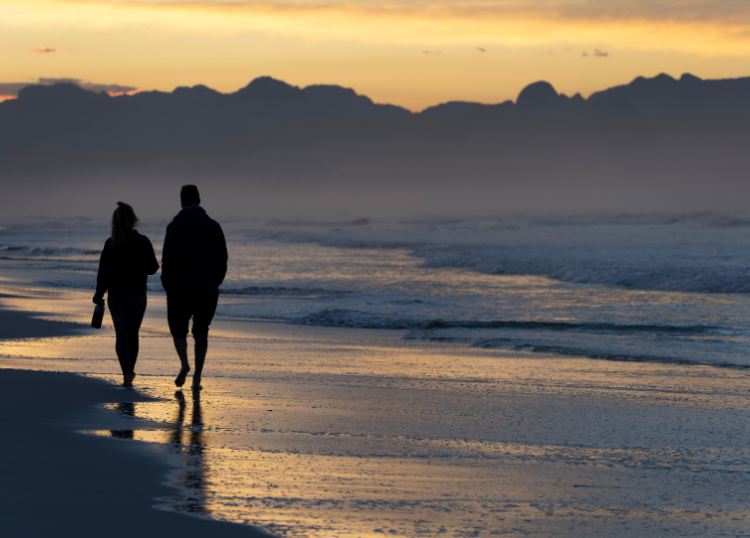
Some coastal experiences do not need an itinerary.
A stretch of beach, comfortable shoes and enough time to walk without rushing can be enough.
Spring is particularly well suited to this kind of trip in South Africa. Conditions vary considerably along the country's long coastline, but the season can bring mild walking weather, changing vegetation and opportunities to combine time on the beach with nearby nature reserves, coastal towns and viewpoints.
It is also part of the year when whale watching can add another dimension to sections of the Western Cape coast.
Whether you want a short morning stroll or several hours beside the sea, South Africa has coastlines where the walk itself is the main attraction.
Cape Peninsula: Mountains Meet the Atlantic
The Cape Peninsula provides some of the country's most dramatic combinations of mountain and ocean scenery.
Beaches along the Atlantic side can offer broad views towards the Twelve Apostles and surrounding peaks, with the character of the coast changing considerably as you move south.
Long sandy sections suit relaxed walks, while rocky areas, tidal pools and granite formations create natural stopping points.
Spring conditions can still be changeable, particularly when wind moves through the peninsula, so it is worth checking the forecast rather than assuming a warm day in the city will translate into identical conditions at the beach.
The reward is a coastline where even a relatively short walk can feel far removed from the urban areas nearby.
Noordhoek: A Beach Made for a Long Walk
Noordhoek is well suited to anyone who wants space.
Its broad beach creates a strong sense of scale, with mountains behind the shoreline and a long sweep of sand extending into the distance.
You do not need to cover the entire beach to appreciate it.
A shorter out-and-back walk provides the same open views while allowing you to choose a distance that suits the weather and your available time.
Spring can bring cool breezes, so layers are useful even when the day begins warmly.
This is less about ticking off landmarks and more about enjoying the scale of the coast.
False Bay Offers a Different Peninsula Experience
Crossing to the False Bay side of the peninsula changes the atmosphere.
The coastline includes sheltered bays, rocky sections, fishing communities and views across the bay towards distant mountain ranges.
Areas around Muizenberg, St James and Kalk Bay can work particularly well for travellers who want to combine a coastal walk with cafés, tidal pools and time in town.
The experience is more urban than an isolated beach walk, but that can be part of the appeal.
You can walk beside the sea in the morning and have plenty of options nearby when you are ready for breakfast or lunch.
Hermanus Combines Coastal Walking With Whale Season
Hermanus is an obvious spring destination for travellers interested in both walking and marine life.
The town's coastal setting provides extensive sea views, and spring falls within the broader period when southern right whales can be seen along parts of the Western Cape coastline.
Sightings are never guaranteed.
That uncertainty is part of wildlife watching, and the walk remains worthwhile even when the ocean is quiet.
The rocky shoreline and elevated viewpoints provide a different experience from walking along an uninterrupted sandy beach.
Hermanus also works well for a weekend because coastal time can be combined with nearby restaurants, surrounding nature areas and other Overberg destinations.
De Hoop Brings Wilderness to the Coast
For a more remote coastal experience, the De Hoop area offers a striking combination of dunes, beaches, rocky shoreline and protected natural surroundings.
This is the kind of destination where the journey to the coast becomes part of the trip.
The setting feels very different from a town beach.
Rather than moving between restaurants and built-up areas, visitors can spend time concentrating on the coastline, vegetation and wildlife.
Spring can be particularly appealing because the broader region undergoes seasonal changes that add colour and interest beyond the beach itself.
Plan carefully, however, as walking in a reserve requires more preparation than stepping onto an urban beachfront. Check current access information, weather and any relevant reserve requirements before setting out.
The West Coast Has a Quieter Character
The West Coast provides a different visual experience from the mountainous Cape Peninsula.
The landscape can feel broader and more open, with long horizons, fishing villages and stretches of coastline where the scenery is defined as much by simplicity as drama.
Spring is closely associated with seasonal flowers in parts of the region, making it possible to combine coastal walking with inland scenery during the same trip.
Paternoster is one well-known base for this kind of weekend.
A walk along the beach can form part of a slower itinerary built around the village, local food and the surrounding coastline.
The water may look inviting on a clear day, but Atlantic temperatures and conditions should always be treated separately from the suitability of the weather for walking.
Wilderness Lives Up to Its Coastal Setting
The Garden Route gives travellers another style of spring beach walk.
Around Wilderness, long beaches sit beneath forested and vegetated slopes, with lakes, rivers and other natural areas nearby.
The open shoreline makes it easy to build beach walking into a longer Garden Route trip.
You might spend the morning beside the sea and the afternoon around forest, river or lake environments without travelling far.
Spring conditions can vary, and the Garden Route is not guaranteed to provide uninterrupted sunshine.
That variability is part of the region's character.
A cloudy coastal walk can still be beautiful, particularly when mist and changing light soften the surrounding hills.
Plettenberg Bay Offers Several Coastal Perspectives
Plettenberg Bay combines beaches, elevated viewpoints and access to some of the Garden Route's best-known coastal scenery.
For casual walkers, the beaches themselves provide straightforward opportunities to spend time beside the ocean without committing to a demanding hike.
For those wanting more, the wider area provides access to more substantial nature-based walks.
This flexibility makes the town useful for groups with different interests.
One person may want an easy barefoot walk near the accommodation while another wants to spend several hours on a more demanding route.
Spring also suits travellers who prefer active days without relying entirely on hot beach weather.
Gqeberha Makes Coastal Walking Easy to Add to a City Break
A beach walk does not have to happen in a small coastal town.
Gqeberha has an extensive relationship with the sea, making coastal time easy to include in a city stay.
Beachfront sections provide opportunities for walking with accommodation, restaurants and other urban facilities nearby.
This can suit travellers who want the coast without planning a remote getaway.
It also works well for shorter trips where driving several hours beyond the city would consume too much of the available weekend.
As with any urban beach, choose your route and time with local conditions and personal safety in mind.
The Wild Coast Is for a Different Kind of Trip
The Eastern Cape's Wild Coast offers some of South Africa's most distinctive coastal scenery.
Green hills can run towards the sea, rivers interrupt the shoreline and settlements are often more dispersed than in established resort areas.
This is not necessarily the destination for someone looking for a polished beachfront promenade.
That is precisely its appeal.
Walking here can feel more connected to the wider landscape than to a conventional beach holiday.
Travel also requires more planning. Road conditions, access, accommodation and walking routes should be considered beforehand, particularly when heading beyond familiar tourism centres.
For travellers willing to plan carefully, the combination of coastline and rural scenery can make spring a memorable time to visit.
KwaZulu-Natal Brings Warmer Coastal Conditions
Moving north towards KwaZulu-Natal changes the coastal climate considerably.
Spring can already feel distinctly warm, making early morning and later afternoon attractive times for longer walks.
The province offers everything from developed beachfronts to quieter stretches of sand and protected coastal environments.
Durban's beachfront provides a very accessible option for travellers who want an active walk without leaving the city.
Farther north, the coast becomes increasingly associated with dune systems, warm water and nature-based travel.
The type of walk you choose should reflect whether you want urban convenience, a resort setting or a more nature-focused trip.
Choose the Time of Day Carefully
A good beach walk can become unpleasant when the timing is wrong.
Even in spring, exposed sand can feel hot during the middle of a clear day, particularly in warmer parts of the country.
Morning often provides cooler conditions and softer light.
Late afternoon can be equally attractive, especially on west-facing coastlines where the changing light becomes part of the experience.
Tides matter too.
A beach that provides plenty of walking space at low tide may become narrow or difficult to pass when the water rises.
For longer or unfamiliar routes, check tide information and local conditions before leaving.
Treat the Ocean With Respect
A beach walk may feel casual, but the coastline is not a controlled environment.
Waves, currents, tides, slippery rocks and changing weather can create hazards.
Avoid assuming that a calm-looking stretch of water is automatically safe for swimming.
If your walk includes rocky areas, keep an eye on wave conditions rather than focusing entirely on the view.
Footwear also deserves some thought.
Barefoot walking may be comfortable on clean, soft sand, while mixed routes involving rocks, boardwalks or longer distances are often easier with suitable shoes.
Carry drinking water even when the weather feels mild, particularly when there are few facilities along the route.
Let the Walk Be the Main Activity
It is easy to overfill a coastal weekend.
A beach walk gets squeezed between breakfast, sightseeing, lunch reservations and the drive to the next attraction.
Sometimes the better plan is to leave more room.
Choose a stretch of coastline worth spending time on and allow the day to develop around it.
Stop when the view changes. Watch seabirds. Look back towards the mountains. Sit somewhere sheltered when the wind picks up.
If whales or dolphins appear, give yourself time to watch rather than immediately moving to the next planned activity.
A coastal walk is at its best when it does not feel like another appointment.
Final Thoughts
South Africa's coastline offers very different walking experiences within the same season.
The Cape Peninsula combines beaches with mountain scenery, Hermanus and the Overberg add the possibility of spring whale watching, and the West Coast brings open landscapes and a quieter pace.
Farther east, the Garden Route mixes beaches with forests and rivers, while the Wild Coast offers a less developed shoreline. KwaZulu-Natal provides warmer conditions and choices ranging from urban beachfronts to nature-focused coastal trips.
You do not need to cover a huge distance for the walk to be worthwhile.
Choose a coastline that suits the kind of weekend you want, check the weather and tides, and leave enough time to enjoy the surroundings without rushing.
Sometimes one of the most memorable parts of a spring trip is simply following the edge of the country for a while.