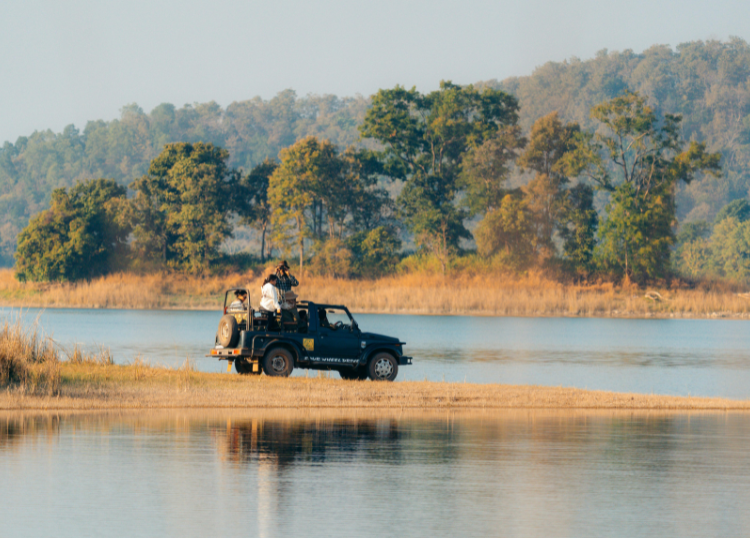
Your first safari can create a strange problem for photographers: suddenly, there is too much to photograph.
An elephant appears beside the road. A giraffe crosses behind it. Someone spots a bird overhead. Your camera focuses on a branch instead of the animal, and by the time you've changed the settings, the moment has disappeared.
Wildlife photography is unpredictable, but you don't need professional equipment or years of experience to return with photographs you're pleased with.
A little preparation makes an enormous difference.
Learn Your Camera Before the Safari
A game drive isn't the ideal place to work out how to change your shutter speed for the first time.
Before travelling, become comfortable with basic camera controls.
You should know how to adjust:
- Shutter speed
- Aperture
- ISO
- Focus mode
- Focus points
- Exposure compensation
- Burst or continuous shooting
Practice making these adjustments without spending too much time searching through menus.
Wildlife situations can change quickly, so being familiar with your camera allows you to concentrate on the animal rather than the controls.
You Don't Need the Most Expensive Camera
Professional wildlife photographers may use sophisticated cameras and very large telephoto lenses, but they're not essential for enjoying safari photography.
Modern mirrorless cameras, DSLRs, compact cameras, and even smartphones can produce excellent images under the right conditions.
Equipment becomes more important when photographing distant wildlife, fast action, or animals in low light.
For a first safari, knowing how to use the equipment you already own is often more valuable than arriving with unfamiliar professional gear.
Choose a Practical Lens
A telephoto lens is particularly useful on safari because animals may be some distance from the vehicle.
Zoom lenses can be convenient because distances change constantly.
An animal might be far away one moment and surprisingly close a few minutes later.
A lens covering a useful range allows you to photograph both tighter wildlife portraits and wider environmental scenes without constantly changing equipment.
If you're renting a lens specifically for the trip, practise using it before departure.
Don't Forget Wider Photographs
One of the easiest mistakes in safari photography is trying to fill every frame with the animal.
Close wildlife portraits can be impressive, but they don't always communicate where the photograph was taken.
Take wider images that include:
- Grasslands
- Mountains
- Rivers
- Trees
- Dust
- Clouds
- Other animals
An elephant beneath a dramatic sky can sometimes tell a stronger story than a tightly cropped photograph of the elephant's face.
Use a Fast Enough Shutter Speed
Wildlife moves, even when it appears to be standing still.
Heads turn. Birds take flight. Lions walk unexpectedly. Vehicles move and photographers shake cameras.
Using a sufficiently fast shutter speed can help reduce motion blur.
The exact setting depends on factors such as:
- Animal movement
- Lens length
- Available light
- Camera stabilisation
- Whether the vehicle is moving
For faster action, you'll generally need a faster shutter speed than you would for a stationary animal.
Don't Be Afraid of Higher ISO
Beginners sometimes keep ISO extremely low because they've been told that higher ISO creates image noise.
While that is technically true, a slightly noisy sharp photograph is often more useful than a perfectly clean photograph ruined by motion blur.
Modern cameras can perform well at higher ISO settings.
If increasing ISO allows you to maintain a useful shutter speed in low light, it can be the better choice.
Continuous Autofocus Helps With Moving Animals
For moving wildlife, continuous autofocus can help the camera keep adjusting focus as the animal changes position.
Different camera manufacturers use different names for these modes, so check your camera before the trip.
You may also want to practise selecting focus areas quickly.
Automatic systems can be excellent, but vegetation can sometimes confuse autofocus and cause the camera to focus on branches or grass rather than the animal.
Use Burst Mode Selectively
Continuous or burst shooting can be useful for action.
It can help when photographing:
- Birds taking flight
- Animals running
- Predators hunting
- Interactions between animals
- Sudden movement
However, holding the shutter button down constantly can produce thousands of nearly identical photographs.
Use bursts when something is happening rather than photographing every stationary animal at maximum frame rate.
Your memory cards and future self will appreciate the restraint.
Focus on the Eyes
When photographing animals, sharp eyes can make an image feel immediately more engaging.
If the animal's face is visible, try to place the focus point on or close to the eye.
Many modern cameras include animal eye-detection autofocus, which can be extremely useful when it works reliably.
If your camera offers this feature, test it before travelling so you understand its strengths and limitations.
Morning and Late Afternoon Light Can Be Excellent
Many game drives take place around sunrise and late afternoon for good reason.
Animals may be more active during cooler periods, and the lower sun can create attractive photographic conditions.
Early and late light can provide:
- Warmer colours
- Longer shadows
- Softer illumination
- More dramatic landscapes
However, these periods can also involve lower light levels.
Be prepared to adjust your ISO and shutter speed as conditions change.
Midday Light Isn't Useless
Harsh midday sunlight can create strong shadows and bright highlights, making photography more difficult.
That doesn't mean you should put the camera away.
Look for:
- Animals in shade
- Reflections near water
- Graphic patterns
- High-contrast scenes
- Wildlife behaviour
Safari photography is about documenting what happens, not waiting exclusively for ideal light.
Watch the Background
It's easy to become so focused on an animal that you forget everything behind it.
A distracting branch appearing to grow from an animal's head can weaken an otherwise strong photograph.
When possible, look around the edges of the frame before pressing the shutter.
A small change in your position or framing may produce a much cleaner background.
On a game vehicle, your movement may be limited, but even a slight adjustment can help.
Leave Space for Animals to Move Into
If an animal is walking or looking in a particular direction, consider leaving some space in front of it.
This can make the composition feel more natural.
For example, a zebra walking from left to right may look better positioned towards the left side of the frame rather than being tightly cropped against the right edge.
Composition rules aren't absolute, but thinking about direction can improve the visual balance of wildlife photographs.
Photograph Behaviour, Not Just Animals
A photograph of a lion standing still is exciting on your first safari.
After several days, you may have dozens of similar photographs.
Behaviour often creates more interesting images.
Watch for:
- Animals interacting
- Feeding
- Grooming
- Playing
- Hunting
- Drinking
- Territorial behaviour
- Parents with young
These moments tell more of a story than a straightforward identification photograph.
Learn to Anticipate Behaviour
Experienced wildlife photographers often appear to react incredibly quickly.
In many cases, they aren't simply reacting. They're anticipating.
Pay attention to what the animal is doing.
A bird crouching or changing posture may be preparing to fly. An antelope staring intently in one direction may have noticed something. Predators may show subtle changes in behaviour before becoming active.
Your safari guide can be extremely helpful here.
Listen when guides explain animal behaviour. Their knowledge can give you time to prepare before something happens.
Be Patient
Wildlife doesn't follow your photography schedule.
An animal may sleep for an hour and then suddenly do something interesting for five seconds.
Patience is therefore one of the most useful safari photography skills.
Don't immediately ask to move on simply because nothing dramatic is happening.
Sometimes waiting quietly produces the photograph everyone else misses.
Don't Ignore Birds
First-time safari visitors understandably concentrate on elephants, lions, giraffes, rhinos, and other large animals.
Birds provide some of the most varied photographic opportunities.
They offer:
- Colour
- Movement
- Interesting behaviour
- Flight photography
- Close-up opportunities
Even travellers who don't consider themselves birders often return from safari with surprisingly large collections of bird photographs.
Photograph the Smaller Details
A safari isn't only about large wildlife.
Look for smaller subjects and details such as:
- Tracks
- Insects
- Reptiles
- Plants
- Feathers
- Textures
- Landscapes
These photographs help build a more complete visual record of the trip.
When you look back at the images years later, the smaller details may bring back memories just as strongly as photographs of the major sightings.
Keep Your Camera Ready
Wildlife can appear unexpectedly.
If your camera is switched off, packed inside a bag, or fitted with a lens cap every time the vehicle moves, you may miss quick sightings.
Keep the camera somewhere secure but accessible during the drive.
You can also set the camera to reasonable general-purpose settings between sightings so you're ready if something happens suddenly.
Bring Enough Memory Cards
Wildlife photography can generate a large number of files, particularly when using burst mode.
Bring more storage than you think you'll need.
Using several memory cards can also reduce the risk of having your entire trip stored on a single card.
If your camera has two card slots, investigate the available recording options before travelling.
Bring Spare Batteries
Safari days can involve long periods away from charging facilities.
Cold mornings, heavy camera use, reviewing images, wireless connectivity, and video recording can all increase battery consumption.
Carry spare charged batteries where possible.
Recharge everything when you return to your accommodation rather than waiting until the morning game drive.
Protect Equipment From Dust
Safari environments can be dusty, particularly during dry periods.
Keep equipment protected when it isn't being used and avoid unnecessary lens changes in dusty conditions.
A basic cleaning kit can be useful for removing dust from external surfaces.
Take particular care when cleaning lenses. Rubbing dust or sand across glass can cause damage.
Don't Let the Camera Become a Barrier
It is possible to become so focused on getting photographs that you barely experience the sighting itself.
Occasionally put the camera down.
Watch the elephants interact. Listen to the birds. Look at the landscape without viewing it through a screen or viewfinder.
Not every moment needs to become a photograph.
Some sightings are worth simply experiencing.
Respect Wildlife and Your Guide
A photograph is never more important than the welfare of an animal or the safety of the people around you.
Follow the instructions of your guide and the rules of the reserve or national park.
Avoid actions intended to force wildlife into a better photographic position.
Responsible safari photography means observing natural behaviour without unnecessarily disturbing it.
Review Your Images Between Drives
You don't need to inspect every photograph immediately after taking it.
However, reviewing a selection between game drives can help identify recurring problems.
Check whether:
- Images are consistently too dark or bright
- Shutter speeds are too slow
- Focus is landing in the wrong place
- Important subjects are being cropped
- Camera settings were accidentally changed
Finding a problem after the first morning is much better than finding it when you return home.
Final Thoughts
The best photography tips for your first safari aren't about owning the most expensive camera or returning with thousands of images.
Know your equipment before you arrive. Keep your shutter speed appropriate for the subject, pay attention to focus and backgrounds, photograph behaviour as well as portraits, and be ready when something happens.
Most importantly, give wildlife time.
Some of the strongest safari photographs come from waiting rather than chasing one sighting after another.
Take the photographs, but occasionally lower the camera too. Your first safari is something you'll want to remember through more than a memory card.