
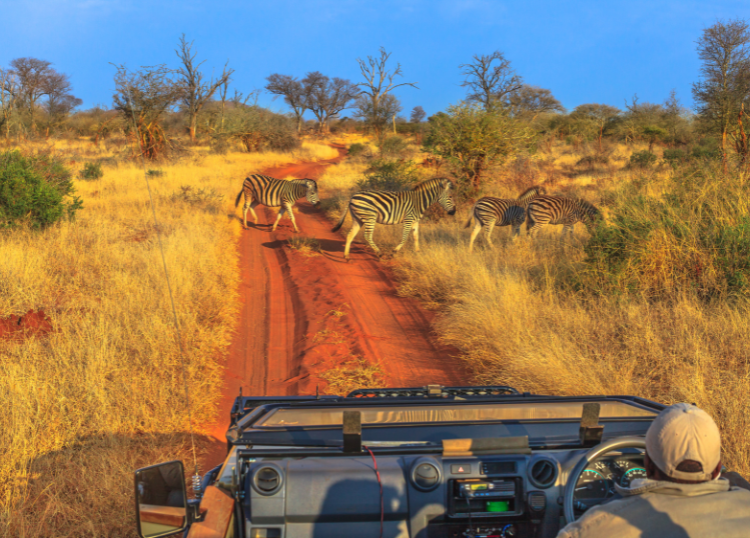
A game drive can feel completely different depending on the time of day.
An early-morning drive may begin in darkness, with cool air and the first bird calls breaking the silence.
An evening drive often starts in warmer conditions before the light softens and the bush changes character.
Both experiences offer opportunities to see wildlife in its natural environment.
However, animal behaviour, visibility, weather and photography conditions can differ.
For visitors planning a South African safari, these differences can influence which drive to book.
Some travellers prefer the quiet atmosphere of sunrise.
Others enjoy the colours of sunset and the possibility of observing animals becoming active as temperatures fall.
Neither time guarantees better sightings.
Wildlife movements depend on season, habitat, weather, food availability and many other factors.
The most rewarding choice often depends on the experience you want rather than a promise of seeing particular animals.
Why the Time of Day Matters on Safari
Wildlife activity changes throughout the day.
Temperature, light and feeding patterns influence how animals use their environment.
Some species are most active around dawn and dusk.
Others are active during daylight or at night.
These patterns are not fixed.
Weather, breeding behaviour and local conditions can affect activity.
Game drives are often scheduled around cooler periods because these can be productive for wildlife viewing.
However, the time of day is only one factor.
An experienced guide's knowledge of the area can be equally important.
What to Expect From an Early-Morning Game Drive
An early-morning game drive usually begins around dawn or, where permitted, before sunrise.
Exact departure times depend on the reserve, season and operator.
Guests may need to wake up while it is still dark.
The drive often begins in cool conditions.
As daylight increases, visibility improves and the landscape becomes easier to observe.
Bird activity may be noticeable.
Some mammals may still be moving after a night of feeding or hunting.
The atmosphere is often quiet, particularly during the first part of the drive.
For many visitors, the changing light is part of the appeal.
What to Expect From an Evening Game Drive
An evening game drive generally begins in the late afternoon.
The first part may take place while temperatures are still relatively warm.
As the sun lowers, the light changes and conditions often become cooler.
Animals may become more active after resting during the hottest part of the day.
Depending on the reserve and its rules, the drive may continue after sunset.
However, night driving is not permitted in every wildlife area.
Visitors should confirm whether the experience includes travel after dark.
An evening drive can combine daytime sightings with the atmosphere of approaching night.
The Difference Between Sunrise and Sunset Conditions
Sunrise and sunset both provide softer light than the middle of the day.
However, the surrounding conditions can differ.
At sunrise, the landscape has cooled overnight.
There may be dew, mist or low cloud in certain habitats and seasons.
At sunset, the ground and vegetation may still hold heat from the day.
Dust can also affect the appearance of the light.
These conditions influence both comfort and photography.
Neither is consistently superior.
Each creates a different atmosphere in the bush.
Wildlife Activity During the Early Morning
Many animals take advantage of cooler morning temperatures.
Some grazers and browsers may be feeding.
Predators may still be active after the night.
Birds can become increasingly vocal as daylight develops.
However, activity varies between species.
Some animals may already be resting when the vehicle reaches them.
Others may move into cover as temperatures rise.
Early morning can provide productive viewing opportunities.
It should not be treated as a guarantee of finding particular wildlife.
Wildlife Activity During the Late Afternoon
Late afternoon can bring a change in animal behaviour.
As temperatures begin to fall, some animals become more active.
Herbivores may move towards feeding areas or water sources.
Predators may begin moving after resting.
Bird activity can also change.
However, the timing depends on the season and local conditions.
During cooler weather, some animals may remain active throughout the day.
An evening drive provides opportunities to observe these transitions.
The value lies in watching natural behaviour rather than simply counting sightings.
Are Predators Easier to See in the Morning or Evening?
Predator sightings are among the experiences many safari visitors hope for.
However, there is no universally reliable time for seeing lions, leopards or other predators.
Some predators are active during cooler periods and at night.
This can make dawn and dusk interesting times to observe them.
However, they may also rest for long periods.
A sighting depends on location, movement and chance.
Guides may use recent observations and knowledge of animal behaviour to inform their routes.
Visitors should avoid choosing a drive solely on the assumption that predators will be easier to find.
How Lion Behaviour Changes Throughout the Day
Lions often spend substantial periods resting.
They may become more active when temperatures are cooler.
This can include early morning, late afternoon and night.
However, lion behaviour varies.
Feeding, social interactions and movement can occur at different times.
A morning drive may encounter lions resting after nocturnal activity.
An evening drive may find them beginning to move.
Neither scenario is guaranteed.
Observing lions at rest can still provide opportunities to understand their social behaviour.
Leopard Sightings and Timing
Leopards are often associated with solitary and elusive behaviour.
They may be active at different times depending on local conditions.
Dawn and dusk can offer opportunities to observe movement.
However, visibility is strongly influenced by habitat.
Dense vegetation can make leopards difficult to see even when they are nearby.
A knowledgeable guide may identify signs or suitable areas.
Visitors should remain patient.
A leopard sighting cannot be promised simply because a drive takes place early or late.
Elephant Activity on Morning and Evening Drives
Elephants may be encountered during different parts of the day.
Their movements are influenced by feeding requirements, water availability and environmental conditions.
In hot weather, access to water can be particularly important.
Morning drives may find elephants feeding or moving between areas.
Evening drives may also encounter feeding groups or animals travelling towards suitable habitat.
However, behaviour varies.
Elephants require respectful viewing distances.
Guides should prioritise safety and avoid interfering with their movement.
Giraffes, Zebras and Antelope
Giraffes, zebras and different antelope species may be active during both morning and evening drives.
Feeding patterns can vary according to temperature and habitat.
Early morning may provide pleasant conditions for observing grazing or browsing.
Late afternoon can also be productive.
However, species differ in their behaviour.
Some may seek shade during hotter periods.
Others may remain visible in open areas.
Visitors should pay attention to the interactions between animals and their surroundings.
These observations can be as interesting as sightings of large predators.
Birdwatching on Early-Morning Drives
Early morning is often attractive to birdwatchers.
Many birds become vocal and active around dawn.
Calls can help guides and visitors locate species.
Birds may be feeding, displaying or moving between resting and feeding areas.
However, bird activity depends on the season and weather.
Some species are more active later in the day.
Migratory birds may be present only during particular months.
Visitors interested in birdwatching should discuss their priorities with the guide.
A bird-focused drive may require a different pace from a general wildlife outing.
Birdwatching During Evening Drives
Evening drives can also provide interesting bird sightings.
Some birds become active as daylight fades.
Others may gather at roosting areas.
Raptors and other species may still be visible in suitable conditions.
However, declining light can make identification more difficult.
Binoculars and suitable camera equipment may help.
Visitors should not expect the same level of visibility after sunset.
An evening drive can be particularly interesting for observing changes in bird activity as night approaches.
Nocturnal Wildlife and Night Drives
Some animals are primarily active after dark.
These may include certain small mammals, predators and nocturnal birds.
An evening drive that continues into darkness may offer opportunities to see them.
However, this depends on the reserve's rules.
Many public park visitors must leave the roads before prescribed gate-closing times.
Guided night drives may be available only through authorised operators.
Visitors should confirm exactly what is included.
A sunset drive and a night drive are not necessarily the same experience.
Morning Drives and Signs of Overnight Activity
Early morning can provide evidence of what happened during the night.
Tracks may be visible on suitable surfaces.
Guides may notice fresh signs of animal movement.
Calls and alarm behaviour can also provide clues.
However, interpreting these signs requires experience.
Tracks do not guarantee that the animal responsible is still nearby.
The value of these observations lies partly in learning how wildlife uses the environment.
An early drive can provide a sense of the bush becoming active after night.
Evening Drives and the Transition to Night
One of the distinctive features of an evening drive is the gradual change in the environment.
Daytime birds may become quieter.
Other sounds may become more noticeable.
Light levels fall.
Some animals begin moving more actively.
If the drive continues after dark, visitors may experience a different range of wildlife activity.
However, the transition should be observed without disturbing animals.
A responsible operator will follow reserve rules and appropriate wildlife-viewing practices.
How Temperature Affects Game Drive Comfort
Temperature can make a substantial difference to the experience.
Early mornings may be cold, particularly in winter.
Open safari vehicles can feel considerably cooler when moving.
Evening drives may begin in warm conditions and become chilly after sunset.
Summer mornings can also be humid in some regions.
The appropriate clothing depends on location and season.
Layering is usually practical.
Visitors should prepare for temperature changes rather than dressing only for the conditions at departure.
Winter Morning Drives in South Africa
Winter mornings can be very cold in parts of South Africa.
This is particularly relevant in open vehicles.
Wind exposure may make conditions feel colder.
Warm layers, a jacket and suitable footwear can improve comfort.
A hat and gloves may also be useful in colder areas.
However, temperatures can rise after sunrise.
Clothing that can be removed easily is practical.
Visitors should check the forecast for the specific reserve rather than assuming all safari destinations have similar winter conditions.
Summer Morning Drives
Summer morning drives often begin in relatively mild conditions.
However, humidity and temperature vary across South Africa's wildlife regions.
Some areas can become hot quickly after sunrise.
Lightweight clothing and sun protection may be useful.
Insect activity can also vary.
Visitors should follow appropriate guidance on insect bite prevention.
Water is important, even during shorter drives.
The cooler part of the morning can provide comfortable viewing conditions before temperatures rise.
Summer Evening Drives
Summer evening drives may begin in considerable heat.
Conditions often become more comfortable as the sun lowers.
However, afternoon thunderstorms can affect some wildlife regions.
Rain may change visibility and road conditions.
Visitors should bring suitable weather protection if recommended by the operator.
A light layer may still be useful after sunset.
The experience can be particularly atmospheric when changing weather creates dramatic skies.
However, safety and operational decisions should remain with the guide.
Morning Game Drives for Wildlife Photography
Early-morning light can be attractive for wildlife photography.
Low-angle sunlight may create warm colours and soft shadows.
The landscape can also appear different when mist or dew is present.
However, light levels may initially be low.
Photographers may need suitable camera settings or equipment.
Animal movement can create additional challenges.
The best photographs depend on subject position, background and timing.
Morning light is useful, but it does not guarantee better images.
Evening Game Drives for Wildlife Photography
Evening light can also provide appealing photographic conditions.
The lower sun may create warm tones and strong contrasts.
Silhouettes can be particularly effective when animals are positioned against an open sky.
However, the available light decreases quickly near sunset.
Photographers may need to adjust shutter speed and sensitivity.
After dark, photography becomes more challenging.
Flash use may be restricted or inappropriate.
Visitors should follow the guide's instructions and avoid disturbing wildlife for a photograph.
Why the Direction of Light Matters
Good wildlife photography depends partly on the relationship between the sun, subject and camera.
Morning and evening drives may offer different lighting directions along the same route.
An animal photographed with the sun behind the photographer may appear very different from one photographed against the light.
However, safari vehicles cannot always be positioned for ideal photographs.
Wildlife safety and reserve rules take priority.
Photographers should remain flexible.
The changing light can create opportunities even when the subject is not perfectly positioned.
Photographing Wildlife in Low Light
Both sunrise and sunset can involve low-light conditions.
This becomes particularly important when animals are moving.
A slow shutter speed may produce blurred images.
Higher sensitivity settings can help but may introduce image noise.
Image stabilisation may also be useful.
However, equipment choice should match the photographer's experience.
A simple camera or smartphone can still capture memorable scenes.
Visitors should avoid becoming so focused on photographs that they miss the experience itself.
Landscapes Look Different at Dawn and Dusk
Game drives are not only about animals.
The landscape contributes significantly to the experience.
At dawn, changing light can reveal details gradually.
Mist or cooler air may create a distinctive atmosphere.
At dusk, the landscape may take on warmer colours.
Cloud formations can become more noticeable.
These conditions vary by region and season.
Visitors interested in scenery may enjoy both times for different reasons.
The same route can feel unfamiliar when experienced under different light.
Morning Drives and the Sense of Quiet
Early morning often creates a particular atmosphere.
There may be fewer sounds associated with daytime activity.
The first bird calls can become more noticeable.
Cool air and changing light add to the experience.
However, the level of quiet depends on the reserve and number of vehicles.
Popular areas may still be busy.
A private concession may provide a different experience from a heavily visited public road.
The appeal of morning is partly the sense of watching the environment change as the day begins.
Evening Drives and the Atmosphere of Sunset
Evening drives often have a different rhythm.
The light becomes softer.
Temperatures may fall.
Animal activity can change.
Some guided drives include a permitted stop for refreshments.
However, this depends on the operator and reserve rules.
Visitors should not assume that every sunset drive includes drinks or a scenic stop.
The experience is often memorable because of the changing atmosphere.
It offers a natural conclusion to a day spent in the bush.
How Drive Lengths Compare
Morning and evening drives may differ in duration.
Some operators offer drives lasting a few hours.
Others include longer excursions.
The exact schedule depends on the reserve and type of booking.
Private lodges may organise activities differently from public park operators.
Visitors should check departure and return times.
Consider how the schedule fits with meals and other activities.
A longer drive is not automatically better.
The quality of guiding, route and wildlife conditions can be more important than duration alone.
Early Starts and Holiday Routines
Morning game drives often require an early wake-up.
This can be challenging for travellers who prefer a relaxed holiday schedule.
However, the early start may be part of the appeal.
Visitors can return to accommodation with much of the day still available.
Breakfast may be served before or after the drive, depending on the operator.
Check the arrangements in advance.
For families, consider children's sleeping routines.
A game drive is more enjoyable when everyone is reasonably rested and prepared.
Evening Drives and Dinner Arrangements
Evening drives can overlap with normal dinner times.
Some lodges schedule meals around their activities.
Other operators may return later in the evening.
Visitors should confirm the expected return time.
This is particularly important when staying outside the reserve.
Restaurant closing times and transport arrangements may affect the evening.
For families with young children, a late return can be difficult.
A practical schedule helps prevent the drive from creating unnecessary pressure on the rest of the holiday.
Which Drive Is Better for First-Time Safari Visitors?
First-time safari visitors can enjoy either time of day.
Morning drives provide an introduction to the bush as daylight develops.
Evening drives offer changing light and potentially different animal behaviour.
The best choice depends on the visitor's schedule and comfort.
Those who dislike very early starts may prefer an afternoon departure.
However, travellers interested in bird activity may favour morning.
If time allows, booking both provides a broader experience.
The most important factor is choosing a reputable operator with knowledgeable guides.
Which Drive Is Better for Families?
Families should consider the ages and routines of the children.
An early drive may require waking young children before sunrise.
An evening drive may extend beyond their normal bedtime.
Temperature can also affect comfort.
Some operators impose minimum age requirements.
These may differ between ordinary game drives and night drives.
Confirm the rules before booking.
A shorter drive may be more suitable for younger children.
The best family safari is one that balances wildlife viewing with comfort and safety.
Which Drive Suits Older Travellers?
Older travellers may have different preferences concerning temperature, vehicle access and departure times.
Cold morning conditions can be uncomfortable for some visitors.
Late evening returns may also be inconvenient.
However, individual preferences vary.
Ask about vehicle design, seating and the duration of the drive.
Confirm whether comfort stops are available.
Travellers with mobility requirements should discuss access before booking.
A suitable operator can explain the practical arrangements.
The preferred drive should reflect personal comfort rather than assumptions based on age.
Morning and Evening Drives in Kruger National Park
Kruger National Park offers different wildlife-viewing arrangements depending on whether visitors are self-driving or using authorised guided activities.
Public gate and camp access times vary by season.
Self-drive visitors must comply with the applicable operating hours.
Certain guided activities may take place outside normal self-drive hours.
However, availability and schedules should be confirmed with the relevant operator.
Wildlife activity also varies across Kruger's different habitats.
Visitors should not assume that one time of day consistently produces better sightings throughout the park.
Private Game Reserves Versus Public Parks
Private game reserves and public national parks may operate differently.
Some private lodges include morning and afternoon drives in their accommodation packages.
Public parks may offer separately booked guided activities.
Road access and operating hours can also differ.
Certain reserves permit authorised night drives.
Others do not.
The experience may be influenced by vehicle numbers, guide arrangements and reserve rules.
Before booking, compare what is actually included.
A morning drive at one property may differ considerably from a morning drive elsewhere.
The Role of an Experienced Safari Guide
A knowledgeable guide can add considerable value to either drive.
Guides interpret tracks, sounds and animal behaviour.
They also understand local habitats and seasonal patterns.
However, even experienced guides cannot control wildlife movements.
A responsible guide will avoid making unrealistic promises.
They should also maintain appropriate distances and follow reserve rules.
Visitors may learn more from an ordinary sighting explained well than from a dramatic encounter without context.
Good guiding can make both morning and evening drives worthwhile.
Why Wildlife Sightings Cannot Be Guaranteed
Wild animals move freely within their habitats.
Their behaviour is influenced by factors that are not fully predictable.
Rainfall, food availability and temperature can all affect where animals are found.
Human activity may also influence movement.
A guide may know where particular species have recently been seen.
However, those animals may have moved.
Visitors should approach a safari with realistic expectations.
A successful drive can include birds, smaller mammals, tracks and interesting behaviour.
The experience is broader than seeing a particular list of animals.
Seasonal Changes in Wildlife Visibility
Seasonal conditions can influence wildlife viewing.
During drier periods, vegetation may be less dense in some regions.
Animals may also concentrate around available water sources.
During wetter periods, vegetation can become thicker and water more widely available.
However, these patterns vary across South Africa.
Different reserves experience different rainfall seasons.
Wildlife movement is also influenced by local habitat.
The best time for a drive should therefore be considered in relation to the specific destination.
Rain and Cloud Cover on Game Drives
Weather can change the character of a drive.
Cloud cover may create softer, more even light.
Rain can affect visibility and road conditions.
Some animals may seek shelter.
Others may remain active.
The response depends on the species and weather intensity.
Operators may alter routes or cancel activities when conditions are unsafe.
Visitors should understand the booking terms.
Flexible expectations are important when travelling during rainy periods.
Insect Activity at Dawn and Dusk
Insects may be more noticeable during certain periods around sunrise and sunset.
The level of activity depends on location, season and weather.
Visitors should follow appropriate insect bite prevention measures.
Long sleeves and suitable repellent may be useful.
In malaria-risk areas, travellers should seek current medical advice about prevention before their trip.
A game drive schedule does not eliminate exposure risk.
Health precautions should reflect the destination and personal circumstances.
What to Wear on an Early-Morning Game Drive
Morning clothing should account for changing temperatures.
A warm outer layer may be necessary in winter.
Comfortable trousers and closed shoes are practical.
Neutral colours are commonly recommended.
However, the operator may have particular clothing guidance.
A hat and sun protection can become useful after sunrise.
Avoid carrying unnecessary bulky items.
The aim is to remain comfortable as conditions change during the drive.
What to Wear on an Evening Game Drive
Evening drives may begin in warm weather and finish in cooler conditions.
Layered clothing is useful.
A lightweight jacket may be sufficient in some seasons.
Colder regions may require warmer clothing.
Closed shoes can be practical for permitted stops.
Insect protection may also be relevant.
Avoid assuming that a hot afternoon means the entire drive will be warm.
Check the forecast and ask the operator for local recommendations.
What to Bring on Either Drive
Binoculars can improve wildlife viewing.
A camera or smartphone may be useful for photographs.
Sun protection and drinking water are also practical considerations.
However, some operators provide water or refreshments.
Check what is included.
A small bag may be easier to manage than a large backpack.
Avoid bringing items that create noise or distract other passengers.
The most useful equipment is what helps you observe comfortably without interfering with the experience.
Why Patience Matters on Safari
Wildlife viewing involves periods of waiting and observation.
Some drives include frequent sightings.
Others may involve long stretches without large animals.
These quieter periods can still be interesting.
Guides may point out birds, plants, tracks or smaller species.
Visitors who focus only on major predators may overlook much of the environment.
Patience allows time to notice behaviour.
Both morning and evening drives reward travellers who remain attentive rather than expecting constant action.
Respectful Wildlife Viewing at Any Time
Wildlife welfare should take priority during game drives.
Visitors should remain seated unless the guide permits otherwise.
Noise should be kept to a reasonable level.
Animals should not be fed or approached.
Photographs should not require disturbing wildlife.
Guides should follow reserve rules and maintain appropriate viewing distances.
These principles apply equally at sunrise and sunset.
A memorable sighting should never depend on creating stress or danger for an animal.
Are Morning Drives Usually Better Than Evening Drives?
There is no universal answer.
Morning drives can provide cool conditions, early bird activity and opportunities to observe animals after the night.
Evening drives offer changing light and the transition towards nocturnal activity.
However, the actual sightings depend on the destination and conditions.
Some visitors prefer the atmosphere of sunrise.
Others find sunset more appealing.
The quality of the guide and the reserve's wildlife habitat can matter more than the departure time.
Both options can provide worthwhile experiences.
Should You Book Both Morning and Evening Drives?
Booking both can be valuable when the itinerary allows.
The two drives provide different light, temperatures and activity patterns.
They may also follow different routes.
This increases the variety of experiences without guaranteeing particular sightings.
For visitors staying at a safari lodge, both drives may already be included in the programme.
However, check the schedule.
Travellers on a shorter holiday may need to choose one.
In that case, personal preferences and practical arrangements should guide the decision.
Common Mistakes When Choosing a Game Drive
One mistake is assuming that a particular time guarantees predator sightings.
Another is overlooking seasonal temperatures.
Visitors may also confuse sunset drives with authorised night drives.
Some travellers book activities without checking age restrictions.
Others underestimate the effect of early departures or late returns.
Photography expectations can also be unrealistic.
A successful safari requires flexibility.
The best preparation is to understand the experience being offered and arrive ready to observe whatever wildlife is present.
Questions to Ask Before Booking
Confirm the departure and return times.
Ask whether the drive takes place in an open or enclosed vehicle.
Check whether the activity continues after dark.
Find out whether refreshments are included.
Ask about minimum ages and accessibility arrangements.
Confirm the cancellation policy.
It is also useful to understand the reserve's wildlife-viewing rules.
For photography-focused travellers, ask whether the operator offers specialist drives.
Clear information helps ensure that the experience matches expectations.
Final Thoughts
Early-morning and evening game drives offer different perspectives on South Africa's wildlife.
Morning drives often begin in cooler conditions as the landscape becomes active with the first light.
They can be particularly appealing for birdwatching, photography and observing the transition from night to day.
Evening drives provide changing colours, cooling temperatures and opportunities to observe wildlife activity as daylight fades.
Where authorised night driving is included, visitors may also encounter species that are less active during daylight.
However, neither time guarantees better sightings.
Wildlife behaviour depends on the reserve, season and environmental conditions.
For travellers who can only choose one drive, comfort, schedule and personal interests should guide the decision.
Those with enough time may find that experiencing both provides a more complete picture of the bush.
The value of a game drive lies not only in which animals appear, but also in the opportunity to observe their behaviour and experience the environment at a particular moment.
Sunrise and sunset each offer something different, and both can become memorable parts of a South African safari.