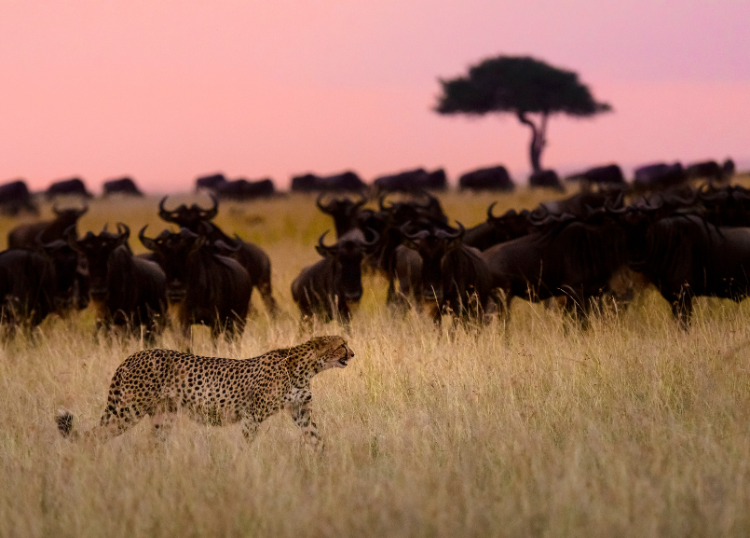
Seeing wildlife can be one of the most memorable parts of travelling.
In South Africa, those experiences can range from guided game drives and birding trips to marine excursions, conservation programmes and visits to wildlife rehabilitation facilities.
Some experiences contribute to conservation, education and local employment.
Others raise more difficult questions about animal welfare, breeding, captivity and the amount of human interaction involved.
The challenge for travellers is that these differences are not always obvious from advertising.
A wildlife attraction may use conservation language, show photographs of apparently relaxed animals and describe close contact as educational.
Those claims are worth examining before booking.
Choosing responsibly starts with understanding what happens to the animals when visitors are not taking photographs.
Start With the Type of Experience
Not all wildlife tourism involves the same relationship between people and animals.
Observing free-ranging animals in a national park is fundamentally different from visiting animals kept permanently in captivity.
A rehabilitation centre caring for injured wildlife also serves a different purpose from an attraction maintaining animals primarily for visitor interaction.
Begin by asking what the experience actually is.
Are you observing animals in their natural habitat?
Is the facility rehabilitating animals for release?
Are animals permanent residents because they cannot safely return to the wild?
Or are animals being kept specifically so tourists can interact with them?
Understanding that distinction provides useful context for everything else.
Look Beyond the Word "Conservation"
Conservation is a powerful term in wildlife tourism.
Its use does not automatically tell you how an organisation operates.
Look for specific information about the work being done.
Does the organisation protect habitat?
Does it fund research or anti-poaching work?
Does it rehabilitate wildlife?
Are animals released where appropriate?
Does it support conservation programmes beyond the visitor attraction itself?
Specific explanations are more useful than broad statements about "helping wildlife."
A credible organisation should generally be able to explain what its conservation work involves and how tourism contributes to it.
Ask Why the Animals Are There
If wildlife is being kept in captivity, there should be a clear explanation for why.
Some animals may have been injured and cannot return to the wild.
Others may have been confiscated from illegal trade or inappropriate private ownership.
Certain facilities may temporarily hold animals while they recover before release.
These circumstances differ from deliberately breeding animals to maintain a steady supply for tourism.
Ask where the animals came from and what their long-term future is.
The answer can reveal a great deal about the purpose of the facility.
Be Cautious About Direct Animal Contact
Close contact can make a wildlife experience feel special.
That does not necessarily mean it benefits the animal.
Touching, holding, riding or posing with wildlife can require animals to tolerate repeated interactions with unfamiliar people.
Ask why the contact is necessary.
A legitimate veterinary or rehabilitation procedure is very different from routine visitor handling arranged primarily for photographs.
The closer the interaction, the more important it becomes to understand how the animal's welfare is protected and whether participation is genuinely necessary.
Question Experiences Built Around Photographs
Photographs are a normal part of travel.
Problems can arise when the entire wildlife experience appears designed around producing close-contact images.
If the main selling point is the opportunity to hold, touch or pose beside an animal, ask what role that interaction plays beyond providing a photograph.
Wildlife should not need to perform for visitors simply to make an experience memorable.
Observation from an appropriate distance can provide a much more natural understanding of animal behaviour.
A good wildlife experience does not require physical contact to be worthwhile.
Research Predator Interaction Carefully
Experiences involving lions, cheetahs and other predators deserve particular scrutiny.
Young animals can appear manageable and harmless in tourism photographs.
They do not remain young.
If visitors are offered regular interaction with cubs or juvenile predators, ask where those animals come from, why they are being handled and what happens when they become adults.
A responsible explanation should address the complete life of the animal rather than only the period during which tourists can interact with it.
Be cautious when those answers are vague.
Breeding Practices Matter
Captive breeding can have different purposes.
Some breeding programmes may form part of legitimate conservation work involving carefully managed populations.
Other facilities may breed animals primarily to maintain visitor attractions.
Ask whether breeding occurs and why.
If conservation is given as the reason, look for information about how the programme contributes to conservation outcomes.
Are animals intended for appropriate release programmes?
Is the breeding connected with recognised population-management work?
Breeding more animals in captivity is not automatically equivalent to conserving wild populations.
Understand the Difference Between Rehabilitation and Sanctuary
Terms such as "sanctuary," "rescue centre" and "rehabilitation centre" can sound similar.
Their functions may be very different.
Rehabilitation generally involves caring for animals with the aim of returning suitable individuals to the wild where possible.
A genuine sanctuary may provide lifelong care for animals that cannot be released.
Some facilities perform both functions.
Ask what happens to animals after treatment and how decisions about release are made.
The organisation should be able to explain why permanent residents cannot return to the wild.
Release Should Not Be Assumed
Seeing an animal in a rehabilitation facility does not necessarily mean it will eventually be released.
Some injuries may prevent survival in the wild.
Animals that have become heavily habituated to people may also face difficulties.
Responsible facilities make release decisions based on the animal's condition and appropriate professional assessment rather than visitor expectations.
If a centre claims to rehabilitate wildlife, look for information about actual release work and what happens when release is not possible.
Observe How Animals Can Respond to Visitors
One useful welfare question is whether animals have any choice about interaction.
Can they move away from visitors?
Do they have quieter areas where they are not constantly visible?
Are they required to participate in repeated encounters throughout the day?
Animals should not necessarily be expected to remain available whenever tourists want to see them.
An experience that respects natural behaviour may involve waiting, keeping distance or occasionally not seeing a particular animal at all.
That uncertainty is normal when wildlife is treated as wildlife.
Natural Behaviour Is a Useful Indicator
Consider whether the experience allows animals to behave in ways appropriate to their species.
Wild animals may need space to move, forage, rest, socialise or avoid one another.
The requirements differ enormously between species.
A visitor cannot assess every aspect of animal welfare from a short visit.
You can still ask whether the environment appears designed around the animals' needs or primarily around making them convenient to view.
An enclosure should not be judged only by whether it looks attractive to people.
Space Alone Does Not Answer Every Welfare Question
Large enclosures can be positive, but size is only one consideration.
The quality and complexity of the environment matter too.
Animals may require shelter, appropriate social groupings, opportunities for natural behaviour and suitable feeding arrangements.
Veterinary care and daily management are also important.
A large space does not automatically indicate good welfare, just as a smaller temporary rehabilitation enclosure does not necessarily indicate poor welfare.
The purpose and management of the facility need to be considered together.
Feeding Experiences Need Context
Some wildlife attractions allow visitors to feed animals.
Ask why this is permitted and how it is managed.
Feeding wild animals can change their behaviour and encourage them to associate people with food.
In controlled captive settings, carefully managed feeding may have a different purpose.
The important distinction is whether feeding supports appropriate animal care or exists mainly as entertainment.
On safari and in natural areas, follow the rules provided by guides and conservation authorities rather than offering food to wildlife yourself.
Avoid Encouraging Wild Animals to Approach
An ethical wildlife experience should not depend on manipulating free-ranging animals into unusually close contact.
Food should not be used casually to attract animals for photographs.
Visitors should also avoid calling, chasing or surrounding wildlife.
The objective is to observe behaviour with as little disturbance as reasonably possible.
The fact that an animal allows people to approach does not necessarily mean the interaction is harmless.
Habituation can change how wildlife responds to people long after a particular visitor has left.
Distance Can Improve the Experience
Being further away does not necessarily mean having a poorer wildlife encounter.
Distance can allow animals to continue behaving naturally.
Binoculars and appropriate camera lenses can provide excellent views without requiring a close approach.
Guides can also help visitors interpret behaviour that might otherwise be missed.
Watching an animal feed, interact with others or move naturally through its environment can be more informative than obtaining a close-up photograph of an animal responding to human presence.
Good Guides Set Boundaries
A responsible guide does more than locate animals.
They should manage how visitors behave around them.
That may mean limiting approach distances, controlling noise, deciding when to move away and preventing guests from pressuring animals for better photographs.
Good guiding sometimes involves saying no.
A guide who refuses to chase an animal or crowd a sighting may be protecting both the wildlife and the quality of the experience.
Pay attention to how operators describe these boundaries before booking.
Vehicle Behaviour Matters on Safari
Game drives allow visitors to see wildlife while limiting the need to move through habitat on foot.
The way vehicles are operated still matters.
Too many vehicles around one animal can create pressure, particularly if they surround it or repeatedly block its movement.
Responsible operators should have practices for managing sightings.
Guides should also respect the rules of the reserve or protected area.
Getting closer should not automatically take priority over the animal's ability to move naturally.
Marine Wildlife Needs Space Too
Ethical considerations extend beyond land animals.
Whales, dolphins, seals, penguins and other marine wildlife can also be disturbed by tourism.
Boat approaches, swimming activities and shoreline behaviour should follow appropriate rules for the location and species.
Operators should explain how they limit disturbance.
Wildlife should not be chased simply to guarantee a closer sighting.
Marine trips are affected by weather and animal movement, so responsible operators may not be able to promise exactly what visitors will see.
Be Wary of Guaranteed Wildlife Encounters
Wild animals do not operate according to tourism schedules.
A guarantee of seeing a free-ranging species should therefore be considered in context.
In some locations, sightings may be extremely common.
That is different from manipulating wildlife to make a sighting unavoidable.
Responsible nature-based tourism often involves uncertainty.
You may have an exceptional encounter, a distant sighting or no sighting at all.
That unpredictability is part of observing animals living independently.
Check How Group Sizes Are Managed
Visitor numbers can affect wildlife experiences.
Large groups may create more noise and make it difficult for guides to monitor behaviour.
Some sensitive environments may benefit from smaller groups or limits on the number of people approaching at once.
Ask how the operator manages busy periods.
A facility that receives many visitors is not automatically irresponsible.
What matters is whether visitor numbers are managed in a way that respects the animals, the environment and the quality of the experience.
Read the Rules Before Booking
Responsible operators often publish clear visitor guidelines.
These may address noise, photography, feeding, touching, approach distances and where visitors may walk.
Rules are useful because they indicate that the experience has boundaries.
Pay attention to whether the organisation explains why those rules exist.
Good visitor education can turn a wildlife trip into an opportunity to understand animal behaviour and conservation rather than simply collect sightings.
Look at What the Operator Does When Animals Say No
Wildlife does not literally provide consent in the way a person can, but animals can show avoidance, stress or unwillingness to participate in an interaction.
A responsible operator should respond to those signals.
Ask whether encounters are stopped when an animal moves away or appears uncomfortable.
If an experience must happen on schedule regardless of the animal's behaviour, that deserves closer scrutiny.
Tourism should adapt to wildlife rather than requiring wildlife to perform according to a visitor timetable.
Check Whether Entertainment Depends on Trained Behaviour
Some attractions involve animals performing particular actions for visitors.
Training can also be used legitimately for husbandry or veterinary purposes, so the presence of trained behaviour alone does not answer the welfare question.
Consider why the behaviour is being requested.
Is it necessary for care and management, or primarily entertainment?
If animals perform repeatedly for audiences, research the organisation's practices carefully.
The context matters.
Investigate Volunteer Wildlife Programmes Carefully
Wildlife volunteering can sound like a way to contribute directly to conservation.
Some programmes do provide useful support.
Others may create activities largely to give paying volunteers frequent animal contact.
Ask what work volunteers actually perform.
Would the task still need to be done if there were no tourists paying to participate?
What qualifications are required?
Who supervises the work?
Short-term volunteers should not be performing specialised wildlife-care activities simply because close contact makes the programme more attractive.
Ask Whether Your Presence Is Actually Helping
A responsible experience should be able to explain how tourism contributes.
Entrance fees may support habitat management, rehabilitation, conservation research, local employment or education.
The connection does not need to be complicated.
It does need to be credible.
Ask where visitor revenue goes if that information is available.
Transparency about funding can help distinguish organisations doing substantial conservation work from attractions using conservation language mainly as part of their marketing.
Local Communities Are Part of Responsible Wildlife Tourism
Wildlife conservation does not happen separately from the people living around protected areas.
Tourism can provide employment, business opportunities and other economic benefits.
When researching an operator, consider whether it employs local guides, purchases from nearby suppliers or contributes to community initiatives.
These factors do not replace animal-welfare considerations.
They form another part of responsible tourism.
A wildlife experience can be environmentally thoughtful while also considering the people whose communities are connected to the destination.
Do Not Rely Only on Social Media Photographs
Social media naturally favours dramatic images.
A photograph of someone touching a wild animal may receive more attention than an image taken from a respectful distance.
That can distort expectations.
Research beyond the operator's social feed.
Read its website, policies and information about animal care.
Look for independent reporting where appropriate.
Recent visitor reviews can also reveal how the experience works in practice, although individual reviews should not be treated as definitive evidence.
The goal is to understand the operation, not simply judge the quality of its photographs.
Ask Specific Questions Before Booking
Broad questions often produce broad answers.
Specific questions are more useful.
Ask where captive animals came from.
Ask whether visitors touch them.
Ask whether animals are bred and why.
Ask what happens to animals that cannot be released.
Ask how close vehicles or boats approach free-ranging wildlife.
Clear answers make it easier to understand what you are supporting.
An operator that takes responsible practices seriously should generally be comfortable explaining them.
Check Relevant Accreditation and Professional Relationships
Depending on the type of facility or activity, there may be permits, professional associations or recognised standards relevant to its operation.
These vary according to species, activity and jurisdiction.
Do not assume that a logo alone proves every aspect of an organisation is ethical.
Check what the accreditation or membership actually covers.
Likewise, a permit may establish legal permission for an activity without answering every animal-welfare question.
Credentials can provide useful evidence, but they should be considered alongside the organisation's actual practices.
Legal Does Not Always Mean Responsible
Wildlife tourism operates within laws and regulations, but legality and personal ethical standards are not identical questions.
An activity may be legally permitted while still involving practices a traveller would prefer not to support.
Conversely, online criticism does not automatically prove that an organisation is operating irresponsibly.
This is why research matters.
Look at the specific practices involved rather than relying entirely on labels such as "ethical" or "unethical."
Be Careful With Absolute Claims
Wildlife conservation is complicated.
Be cautious when an attraction claims that a particular tourist activity is essential for saving a species without explaining the connection.
Likewise, simplistic claims that every form of captivity serves exactly the same purpose can ignore important differences between rehabilitation, sanctuary care, conservation breeding and entertainment.
Good organisations tend to provide specific explanations.
They should be able to describe what they do, why they do it and what outcomes they are working towards.
Responsible Experiences Can Still Be Exciting
Ethical wildlife tourism does not mean keeping so much distance that visitors learn nothing or enjoy nothing.
A skilled guide can make a sighting fascinating without manipulating the animal.
A rehabilitation centre can provide powerful education without allowing visitors to handle patients.
A marine excursion can be memorable even when the boat maintains appropriate distance.
The experience comes from seeing and understanding wildlife, not necessarily touching it.
Photography Should Follow the Animal, Not Control It
Wildlife photography often requires patience.
The animal may face the wrong direction, move behind vegetation or leave before the ideal photograph is taken.
That is part of the experience.
Avoid supporting practices that pressure wildlife simply to improve photographs.
Do not ask guides to move closer when they have already established an appropriate distance.
A natural image from further away can represent the encounter more accurately than a staged close-up.
Your Behaviour Matters After You Book
Choosing a responsible operator is only part of ethical wildlife tourism.
Visitors also influence what happens.
Follow instructions.
Keep noise down when requested.
Do not feed or touch animals unless the activity is legitimate, appropriate and clearly managed.
Do not leave designated areas simply to get a better photograph.
Avoid littering and respect protected habitats.
Responsible tourism depends partly on travellers accepting that wildlife encounters have limits.
Children Can Learn From Responsible Encounters
Wildlife experiences can provide valuable learning opportunities for families.
Children can learn about habitat, behaviour, conservation and the difference between wild and domestic animals.
An experience does not need direct contact to be educational.
Guided walks, game drives, birding and well-run conservation facilities can encourage observation and curiosity.
Parents can also use the experience to explain why some rules exist.
Keeping distance becomes part of respecting wildlife rather than something that reduces enjoyment.
Consider the Wider Environmental Footprint
Animal welfare may be the most obvious ethical issue, but wildlife tourism also affects habitats.
Off-road vehicle use, litter, water consumption and poorly managed development can place pressure on natural areas.
Responsible operators should consider these effects.
Accommodation and wildlife activities may also have policies relating to waste, water and sensitive habitats.
No tourism activity has zero environmental impact.
The useful question is whether that impact is being recognised and managed responsibly.
Avoid Treating Wildlife as a Checklist
Travel itineraries can become focused on collecting sightings.
That mindset can create pressure to get closer, stay longer or pursue animals when conditions are not suitable.
Wildlife experiences are often more rewarding when there is time to observe what is already happening.
A common species displaying interesting behaviour can be more memorable than a rushed sighting of a rarer animal.
Good guides can help shift attention from simply identifying species towards understanding them.
Price Is Not a Reliable Measure of Ethics
An expensive wildlife experience is not automatically responsible.
A budget-friendly experience is not automatically problematic.
Price can reflect accommodation standards, group size, location, transport and many other factors.
Assess the practices themselves.
A useful comparison looks at how animals are treated, how visitors are managed, what conservation work is supported and how transparent the organisation is.
Reviews Can Reveal Useful Patterns
Visitor reviews can provide practical clues.
Look for repeated comments about animal handling, overcrowding, guides ignoring rules or visitors being pressured into interactions.
Positive patterns can also be informative, such as guides maintaining distance or spending time explaining conservation practices.
One review should not determine your decision.
Repeated observations across recent reviews may justify further investigation.
Use reviews as a starting point for questions rather than as the only evidence.
Red Flags Worth Investigating
Certain features should prompt additional research.
Routine opportunities to cuddle or handle wild animals deserve scrutiny.
So do attractions heavily focused on predator cubs, repeated staged photographs or unexplained captive breeding.
Vague conservation claims without information about actual programmes are another reason to ask questions.
A lack of transparency about where animals come from or what happens to them later should also be taken seriously.
None of these questions requires a traveller to become a wildlife specialist.
They simply require looking beyond the advertised encounter.
Signs of a More Responsible Experience
Responsible operators often place limits on what visitors can do.
They may maintain distance from animals, restrict group sizes or refuse to guarantee particular sightings.
Facilities caring for captive wildlife may explain why individual animals are there and whether release is possible.
Guides may spend as much time discussing habitat and behaviour as helping visitors take photographs.
The organisation may also provide clear information about conservation projects and visitor rules.
Restrictions can sometimes be a positive sign.
They suggest the experience is not being designed entirely around giving tourists whatever interaction they request.
Final Thoughts
Choosing an ethical wildlife experience requires looking beyond the promise of getting close to an animal.
Start by understanding what kind of experience you are booking.
If animals are captive, ask why they are there, where they came from and what their long-term future is.
If the experience involves free-ranging wildlife, look at how guides manage distance, visitor behaviour and the number of people around sightings.
Treat conservation claims as questions to investigate rather than guarantees.
Look for specific programmes, transparent explanations and practices that put animal welfare ahead of photographs or guaranteed encounters.
Some of the most meaningful wildlife experiences involve very little interaction at all.
Watching an animal behave naturally, learning why it lives where it does and understanding the pressures facing its habitat can provide a much stronger connection than touching or posing beside it.
Responsible wildlife tourism begins with allowing wildlife to remain wildlife.