South Africa has no shortage of internationally recognised attractions, but some of its most significant places receive far less attention than its famous national parks, beaches, and cities.
The country's UNESCO World Heritage Sites tell stories stretching from the earliest development of life and humanity to powerful African kingdoms, colonial conflict, cultural traditions, and extraordinary natural environments.
Some are already major attractions. Others remain surprisingly unfamiliar to many travellers.
If you're interested in history, archaeology, geology, wildlife, or landscapes, these sites deserve a closer look.
Mapungubwe Cultural Landscape, Limpopo
Near South Africa's northern border lies the archaeological landscape of Mapungubwe, once home to a sophisticated African kingdom.
Mapungubwe flourished between approximately AD 900 and 1300, with its position connected to wider trade networks extending beyond southern Africa.
Archaeological evidence provides insight into a society with established social structures and long-distance trade.
For visitors, the appeal extends beyond archaeology. The surrounding landscape of sandstone formations, bushveld, and river valleys creates a striking setting for understanding this important period of southern African history.
Richtersveld Cultural and Botanical Landscape, Northern Cape
The Richtersveld is one of South Africa's most distinctive landscapes.
Located in the country's remote north-west, this mountainous desert environment forms part of the traditional lands associated with the Nama people and their pastoral way of life.
The region is also known for remarkable plant diversity adapted to extremely dry conditions.
Travellers should prepare carefully before visiting. Distances are substantial, conditions can be demanding, and services are limited compared with more developed tourist destinations.
For those prepared for the journey, the isolation is part of the appeal.
Vredefort Dome, Free State and North West
At first glance, the Vredefort Dome may not immediately reveal why it is internationally significant.
Its story becomes much more impressive once you understand what happened there.
The landscape contains evidence of an enormous meteorite impact that occurred roughly two billion years ago. The resulting structure is associated with the world's oldest known meteorite impact structure of its kind and provides important geological evidence about Earth's history.
The site is particularly interesting for travellers fascinated by geology and the immense timescales that shaped the planet.
Maloti-Drakensberg Park
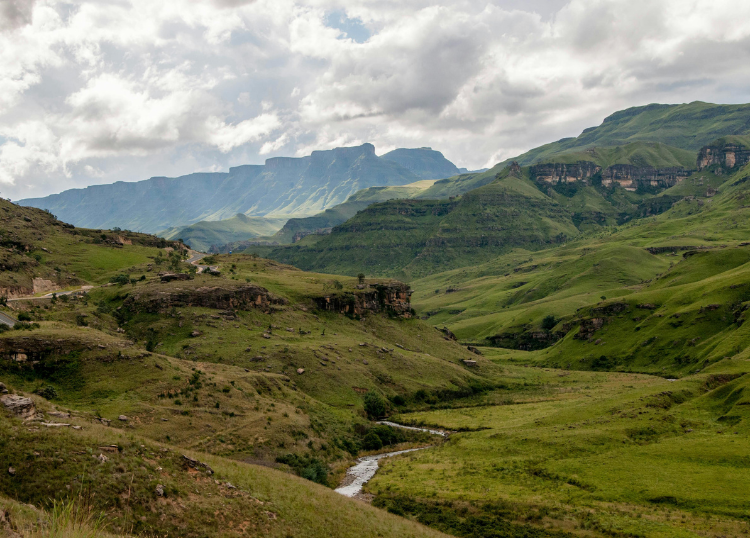
The Drakensberg is famous for dramatic mountain scenery, but its World Heritage importance extends beyond the landscape.
The transboundary Maloti-Drakensberg Park, shared between South Africa and Lesotho, is recognised for both natural and cultural significance.
The mountains contain an exceptional concentration of rock art associated with the San people, providing evidence of communities that lived in the region over thousands of years.
Visitors can combine hiking and mountain scenery with opportunities to learn about this cultural history.
iSimangaliso Wetland Park, KwaZulu-Natal
KwaZulu-Natal's iSimangaliso Wetland Park brings together an unusually diverse collection of ecosystems.
The protected area includes environments such as:
- Lakes
- Wetlands
- Coastal forests
- Beaches
- Dunes
- Marine areas
- Savannah
This diversity supports an equally impressive range of wildlife.
Depending on where and when you visit, activities can include game viewing, birdwatching, beach trips, boating, snorkelling, and other nature-based experiences.
Its scale means iSimangaliso is better treated as a destination in its own right rather than a quick roadside stop.
Barberton Makhonjwa Mountains, Mpumalanga
The Barberton Makhonjwa Mountains contain some of the oldest exposed geological formations on Earth.
The rocks preserve evidence relating to conditions on the planet billions of years ago, providing scientists with valuable information about Earth's early development.
You don't need to be a geologist to appreciate the significance.
Scenic routes through the region allow visitors to experience dramatic mountain landscapes while learning about a period of Earth's history almost impossible to comprehend on an everyday timescale.
Fossil Hominid Sites of South Africa
Many travellers know the Cradle of Humankind near Johannesburg, but fewer appreciate the broader significance of South Africa's fossil hominid sites.
The UNESCO property encompasses important locations associated with evidence about human evolution.
These fossil discoveries have contributed substantially to scientific understanding of early hominins and human ancestry.
For families, the region can also provide an engaging educational travel experience, particularly when museum displays and guided experiences translate complex scientific ideas into accessible stories.
ǂKhomani Cultural Landscape, Northern Cape
The ǂKhomani Cultural Landscape lies in the Kalahari region near South Africa's borders with Botswana and Namibia.
Its significance is closely connected to the cultural traditions and relationship with the land of San communities.
The landscape reflects knowledge developed through generations of living within an arid environment.
Community-linked tourism experiences can provide visitors with a more meaningful understanding of the Kalahari than simply viewing it as an empty desert landscape.
As with any cultural tourism experience, choose responsible operators and experiences that appropriately involve and benefit local communities.
Cape Floral Region Protected Areas
Cape Town visitors may encounter part of this World Heritage property without realising just how significant it is.
The Cape Floral Region is internationally important for its extraordinary plant diversity and high number of species found nowhere else.
The wider World Heritage property includes protected areas across the Cape region rather than a single destination.
For travellers, this means its natural heritage can be experienced through activities such as:
- Hiking
- Botanical gardens
- Mountain trips
- Wildflower viewing
- Nature reserves
Spring can be particularly rewarding in areas known for seasonal displays, although the region's botanical interest extends throughout the year.
Robben Island Beyond the Standard Tourist Checklist
Robben Island is certainly not unknown, but its familiarity can sometimes cause travellers to treat it simply as another Cape Town attraction.
Its history is considerably broader.
Although internationally associated with Nelson Mandela and political imprisonment during apartheid, the island has served various purposes across several centuries, including as a place of imprisonment, isolation, and institutional control.
Visiting with an understanding of this wider history can provide much greater context.
Why World Heritage Status Matters
UNESCO World Heritage status isn't simply a tourism award.
Sites are inscribed because they are considered to possess outstanding universal value under defined cultural or natural criteria.
Recognition can help draw international attention to places that require long-term conservation and management.
For travellers, the designation can also provide a useful starting point for finding places with exceptional:
- Historical significance
- Archaeology
- Cultural heritage
- Biodiversity
- Geology
- Landscapes
However, World Heritage status can also bring increased visitor pressure, making responsible tourism particularly important.
Visit With Respect
Many heritage sites protect environments, archaeological material, cultural traditions, or places with deep meaning to communities.
Visitors should follow local rules and avoid:
- Removing rocks, plants, or artefacts
- Touching vulnerable rock art
- Entering restricted areas
- Disturbing wildlife
- Leaving marked routes where prohibited
- Treating cultural communities as tourist displays
Supporting local guides, accommodation providers, and community-run experiences can also help tourism contribute more directly to the places being visited.
Plan Ahead for Remote Sites
Several of South Africa's lesser-visited World Heritage Sites are located far from major cities.
Before travelling, check:
- Road conditions
- Opening hours
- Accommodation
- Fuel availability
- Guided tour requirements
- Weather conditions
- Park or conservation fees
Some destinations require significantly more preparation than a typical day trip.
That extra effort is often precisely why they remain quieter.
Final Thoughts
South Africa's UNESCO World Heritage Sites reveal just how much of the country's story exists beyond its most familiar attractions.
Mapungubwe tells of a powerful precolonial African society. The Vredefort Dome reaches back billions of years into Earth's geological history. The Richtersveld and ǂKhomani Cultural Landscape connect living cultural traditions with demanding environments, while iSimangaliso, the Cape Floral Region, and the Maloti-Drakensberg demonstrate the country's remarkable natural diversity.
Rather than treating World Heritage Sites as boxes to tick off a travel list, allow enough time to understand why each place matters. Some of South Africa's most rewarding destinations are the ones that require a little more effort to reach.